
Remembering D’Angelo and Spherical Cookies
- NOV. 10 2025
- //
- WRITTEN BY JULIEN GARNER
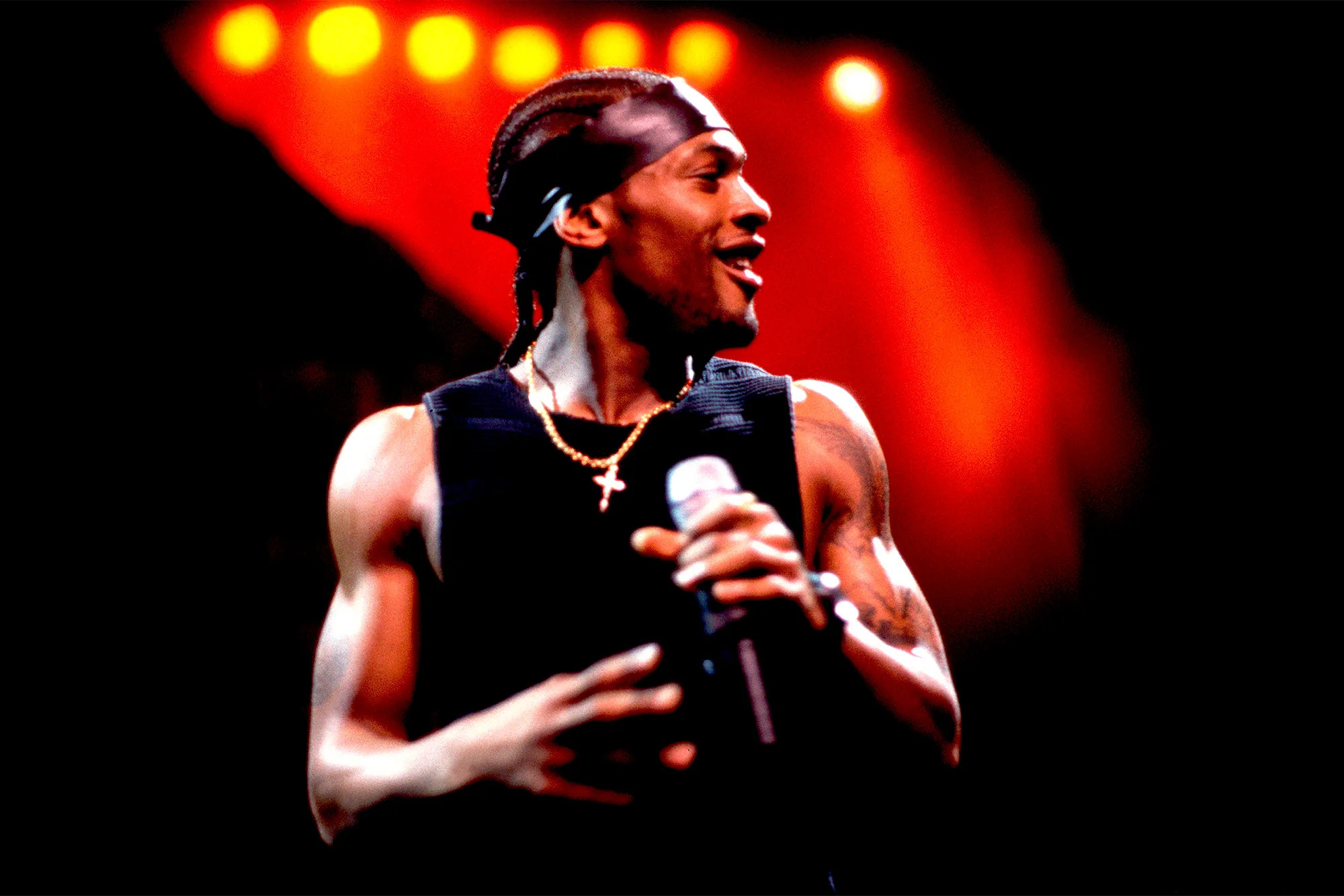
I’ve been trying to understand why the death of D’Angelo has hit me so hard, maybe it’s because he released Brown Sugar when he was twenty-one—the same age I am now. Maybe it’s because of my deep love for soul and R&B. Who’s to say? I’m reminded of when I really got D’Angelo and what he was trying to achieve musically. I was going through a phase of listening to albums while baking. Is that strange? Regardless, I was in my parents’ kitchen, the cabinets a faint yellow—it’s hard to tell whether they had been stained from age and grease or if they’d always been like that, nonetheless, I was baking cookies. I was looking for an album to play whilst I was baking, something new that I hadn’t really heard before. Settling on Brown Sugar because of my thorough enjoyment of the Roots’ Things Fall Apart, and because of the album name, I mean come on. I had listened to D’Angelo’s Voodoo a few months prior and wasn’t won over by what I had heard. I was skeptical about Brown Sugar, though I eventually decided to give D’Angelo one more shot after my past attempts. The first track starts playing, and I was in total free fall; the first twenty seconds really make you feel lost. The drums kick in, you get a little grip on the music, the vocals come in, and it starts to homogenize; you can’t help but start grooving, then the chorus kicks in, D’Angelo sings, “I want some of your Brown Sugar” and in response, “sugar”. It clicks. The album kicks on, and I’m engrossed in it all. The cookies unfortunately never ended up flattening in the oven, making a patch of round, spherical cookies. Whenever I make cookies now, I can’t help but think of D'Angelo’s Brown Sugar, it’s beautiful, I love when music evokes specific memories.
D’Angelo, Michael Eugene Archer was born in 1974 in Richmond, Virginia. Born the son of a Preacher, he was raised in the Pentecostal faith. He started playing at church from a young age and played in various groups throughout his teenage years. After years of honing his craft and working with other musicians, he finally got a record deal in 1993, where he would then release Brown Sugar on July 3, 1995. The album would garner critical acclaim, with its mixture of soul, R&B, and rap, where it would help launch and define the neo-soul sound and movement, along with artists like Janet Jackson and Lauryn Hill. The album encapsulates a smooth R&B feeling; it grooves.
D’Angelo would eventually become close friends with Questlove after a Roots show in Los Angeles. The two musicians had crossed paths before, but Questlove had dismissed D’Angelo until he heard Brown Sugar and knew he needed to work with the flourishing artist. Questlove describes their second meeting at a Roots’ show, “I kinda fronted on him, because I just had a real snobbish attitude about R&B music […] then I heard the record, and I was like kicking myself […] I gotta get back in good graces,” Questlove told Okayplayer in 2013, “I had to take a risk, it was a drum solo […] I used the method of West African drum communication […] I saw his shadow and was like, got him.” This partnership between D’Angelo and Questlove would start a musical revolution. They would go on to create the Soulquarians, a music collective, along with J Dilla, taking inspiration and building off the groundwork that had been laid by the hip hop group, A Tribe Called Quest. Melding live studio musicians and playing with R&B and hip-hop beats. The Soulquarians thrived off each other, and their influence on one another’s work appeared in some of the most influential albums to be released by the collective: the Roots’ Things Fall Apart, Erykah Badu’s Mama’s Gun, and, of course, D’Angelo’s Voodoo, all of which would reach platinum status.
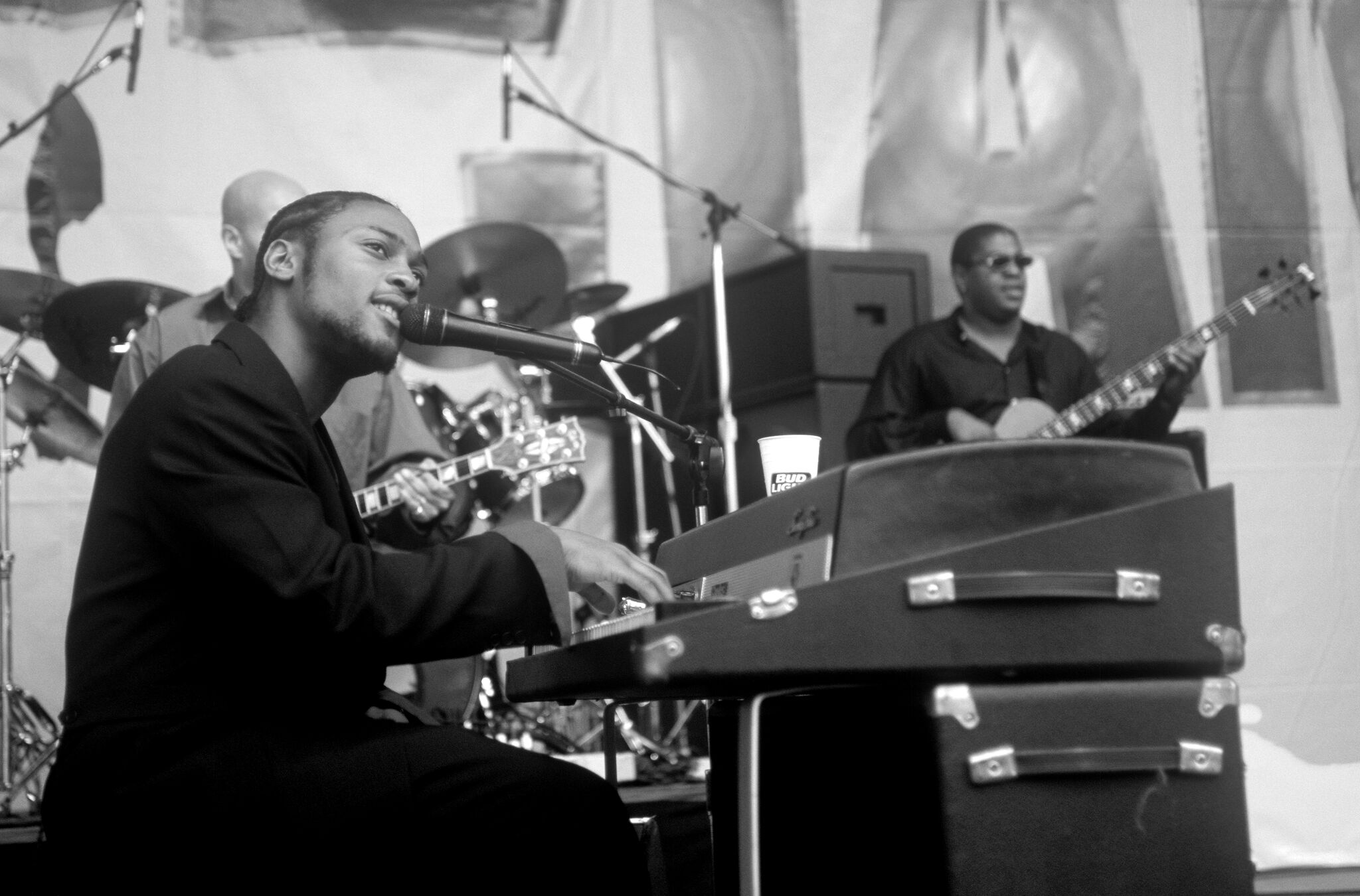
D'Angelo’s sophomore album, Voodoo, would take heavy inspiration from the Soulquarians, and, in particular, the Roots’ Things Fall Apart, as well as the use of J Dilla’s unique rhythmic feel. The album was labelled a “masterpiece” from sources like the New York Times and is considered D’Angelo’s magnum opus. Voodoo would also go on to win the Grammy for Best R&B album in 2000. Shortly after this great win for D’Angelo, things would take a turn for the worse, with the soul-man leaving the spotlight in search of some great creative inspiration. After years of struggling with depression, writer’s block, and substance abuse, D’Angelo would return in 2014 for the release of his most politically charged album, Black Messiah, created in response to the Ferguson protests and unrest that occurred in Missouri in 2014. "Ain't nobody talking about nothing,” D’Angelo told the New York Times, in conversation with former Black Panther, Bobby Seale, “the music that’s coming out now, everybody's talking about how, you know, how many drugs you sell, or how many bottles of champagne you popping at the club, and ain't nobody talking about no real shit.” Black Messiah takes off right where his earlier works left off, but with a slightly more funk-edelic feel. The album would receive, again, critical acclaim, gaining a 9.4 rating from Pitchfork and other music journals alike.
All this to say, D’Angelo has been an incredibly powerful force in the R&B, soul, and hip-hop scene. He has influenced generations of creatives such as Tyler, The Creator, Frank Ocean, The Weeknd, Alicia Keys, Dijon, and many others. D’Angelo unfortunately lost his battle to cancer and passed away on October 14, 2025. I was on the bus to a midterm when I heard the news. I’m not sure how many other people were thinking of D’Angelo in Ramsay Wright Labs, but as I was feverishly writing down answers in the stuffy, boiling hot room that is RW109, I couldn’t help but feel an overwhelming sense of sadness. I never knew D’Angelo, obviously, but nonetheless the feeling of despair and loss of life struck me hard. As I handed in my exam, my sense of stress and anxiety shifted back to sadness. D’Angelo was a true artist, an innovator, and an activist for his community. In a day where genuine, innovative, courageous artists are few and far between, D’Angelo will be remembered as one who not only took a risk, but followed his heart and ears to do what he loved most, play and create music.
In challenging times of loss and stress—whether that be from the death of someone that inspired you, an assignment that you’re up far too late finishing, or a final you should've studied more for—there is one remedy that I truly believe can help: listening to some good music and creating something. My prescription? Bake something; make some cookies, cake, muffins, whatever floats your boat, put on Brown Sugar, and vibe away. Hopefully, your end product will be better than my spherical chocolate chip cookies. I encourage everyone and anyone to spend some time and listen to D’Angelo, The Roots, Lauryn Hill, Roy Hargrove, and any of the Soulquarians. Connect to the music however you see fit. Explore the rich tapestry that is neo-soul and R&B. Perhaps you’re like me, and it will take time for the music to really settle with you; that’s alright. Let yourself feel it, though, give in to the music, remove your barriers of judgment and preconception, or what you think about genre, and enjoy.
Rest In Power D’Angelo.